
Nick ate over 100 lbs of meat in 30 days. But that’s not the crazy part. The deeper he dug into the science, the stranger—and more nuanced—the carnivore story became.
Here’s what he had to say:
I ate over 100 pounds of meat in 30 days.
And that’s not the craziest part.
But before I tell you what happened we need context.
The carnivore diet has had a fascinating trajectory over the past decade.
It exploded into the mainstream as prominent advocates promoted it as a solution for everything from improving athletic performance and body composition to treating obesity, autoimmune disease, and other chronic illnesses.
Recently, though, the narrative seems to have shifted.
To many people, it looks like carnivore is on the decline.
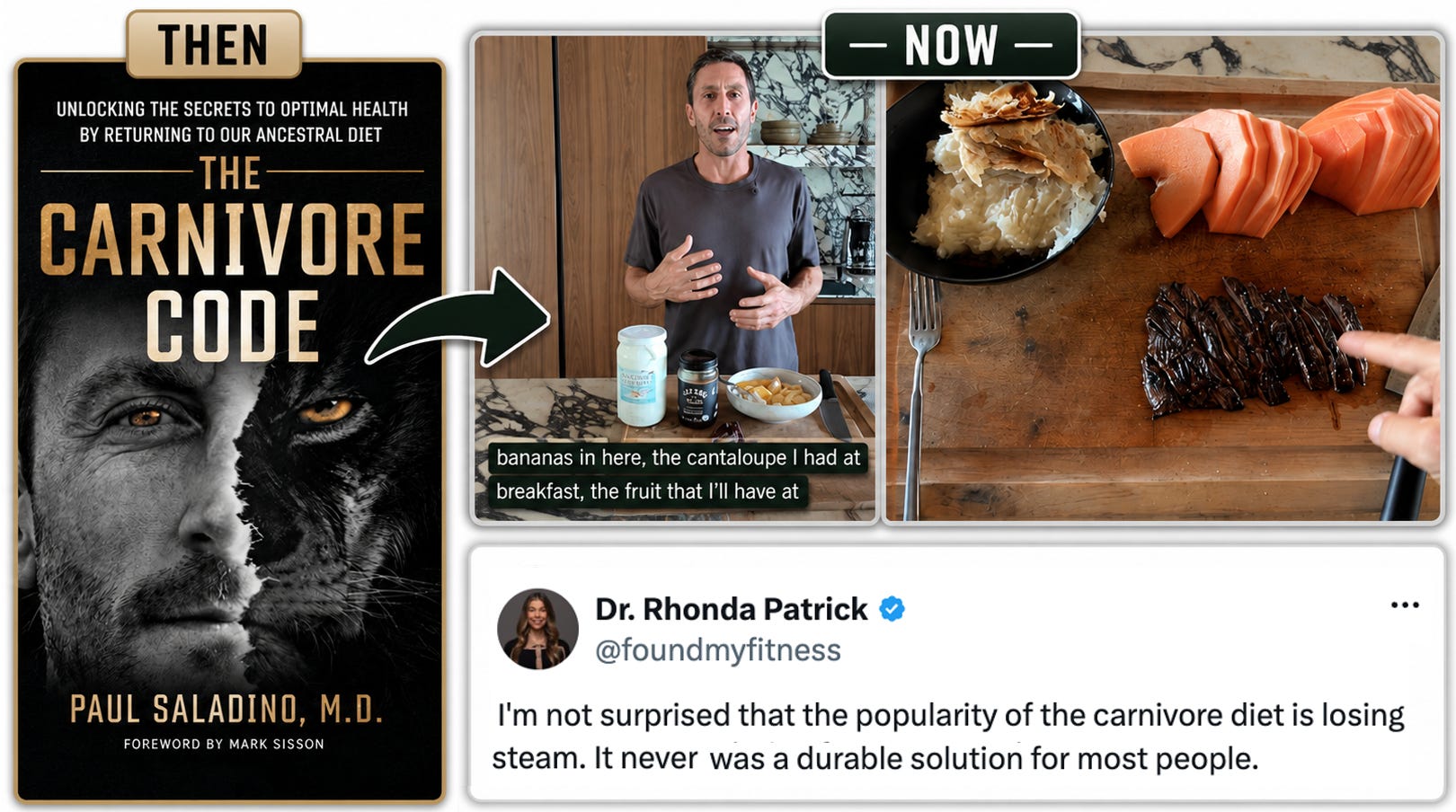
Part of that perception comes from some of its biggest public advocates moving away from strict carnivore. Perhaps the most notable example is Dr. Paul Saladino—better known as the Carnivore MD—who reintroduced fruit and other plant foods.
So… did the carnivore diet fail?
Did it simply follow the predictable life cycle of every fad diet?
Is it fading away like a cauliflower fart in the wind?
Not exactly.
Because beneath the internet debates and social media hot takes is a much more nuanced story.
And that’s what made me want to revisit the topic and re-try carnivore for myself.
In fact, this wasn’t my first experience with carnivore.
A few years ago, I followed the diet for five months, and overall, I had a surprisingly positive experience.
Although, to be fair, my prior version was fairly liberal.
I ate dairy, eggs, and… if I’m being honest… I also cheated with coffee. (Although I suppose if it had been kopi luwak, you could argue it was technically animal-based.)
This time, though, I wanted to go further.
More extreme.
So, I went whole hog. Or perhaps, more appropriately… all cow.
For 30 days, I followed the Lion Diet—the strictest version of carnivore.
No dairy. No eggs. No seafood. No coffee. Not even organ meats. Just ruminant muscle meat, salt, and water.
My experience is only one data point.
But it’s also a springboard into a much bigger story about the carnivore diet, its rise in popularity, its controversies, and what the science tells us… and what’s left to learn.
Ruminant Roadmap
Before we dive in, here’s the roadmap of what we’re going to cover:
- Gut health
- Nutrient deficiencies
- Athletic performance
- Potential medical indications
- Who should try it, and who should not.
Gut Health: From Pooping to Microbiome Diversity.
All right, let’s address the pressing question I know many of you have been wondering about.
Yes—I did, in fact, poop.
I pooped every single day.
This isn’t just my n = 1. It’s consistent with the published literature.
Fiber Elimination for IBS
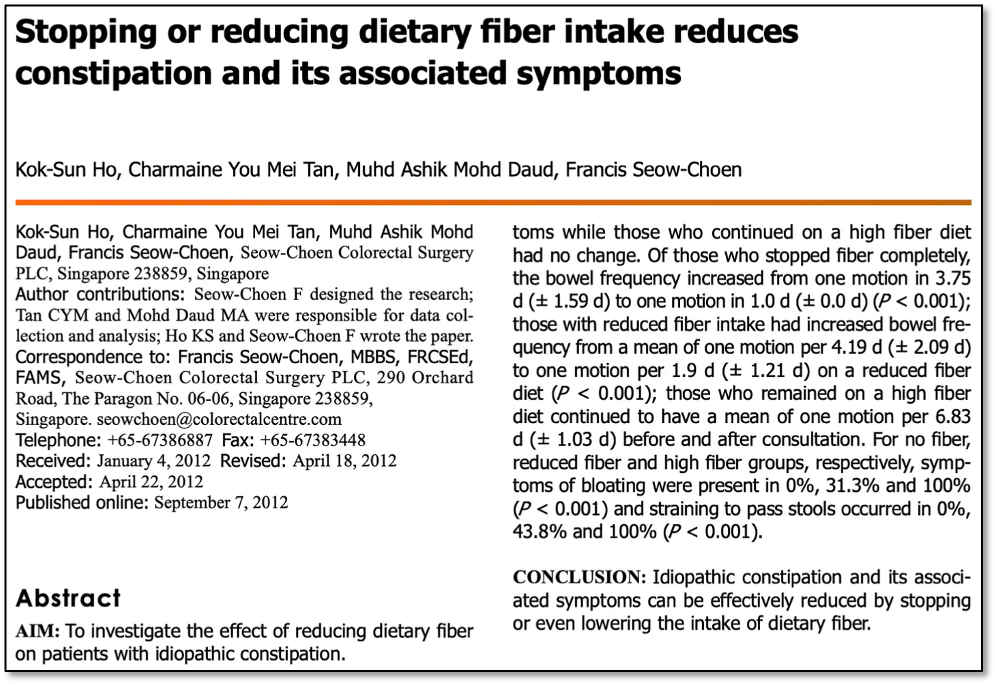
For example, a 2012 study published in the World Journal of Gastroenterology found that, in people with irritable bowel syndrome (IBS) with constipation, eliminating dietary fiber improved bowel frequency from one bowel movement every 3.75 days to one movement every day, along with complete elimination of bloating and straining.
There was even a dose-dependent effect: the more fiber people consumed, the worse their symptoms became.
The researchers concluded: “Idiopathic constipation and its associated symptoms can be effectively reduced by stopping or even lowering the intake of dietary fiber.”
But it goes a level deeper.
Fiber Elimination for IBD
Colleagues and I published a case series of 10 patients who adopted carnivore diets not just for IBS, but for inflammatory bowel disease (IBD).
These were medically confirmed cases of ulcerative colitis and Crohn’s disease.
Some of them quite severe, treatment-resistant cases requiring harsh biologic therapies or even surgery.
And most of these patients had already tried a long list of elimination diets, including vegan, vegetarian, low-FODMAP, Paleo, and others.
Yet each one experienced substantial improvement on a carnivore diet.
- One patient said, “A keto-carnivore diet let me forget I have Crohn’s. No drugs. No surgery. The decades I dealt with Crohn’s are like another lifetime.”
- Another wrote, “With this lifestyle, I have not had to worry about my colitis for 6 years.”
We made this paper open access, and it includes the patients’ prospective dietary records, medical histories, and personal perspectives. So, if you’d like to learn more about their stories, their medical histories, and the underlying mechanisms, just click HERE.
Importantly, there are a list of biological mechanisms that can explain the therapeutic efficacy of a carnivore diet for IBS and IBD.
Biological Mechanisms Behind Carnivore for IBS & IBD
Let’s start with ketones.
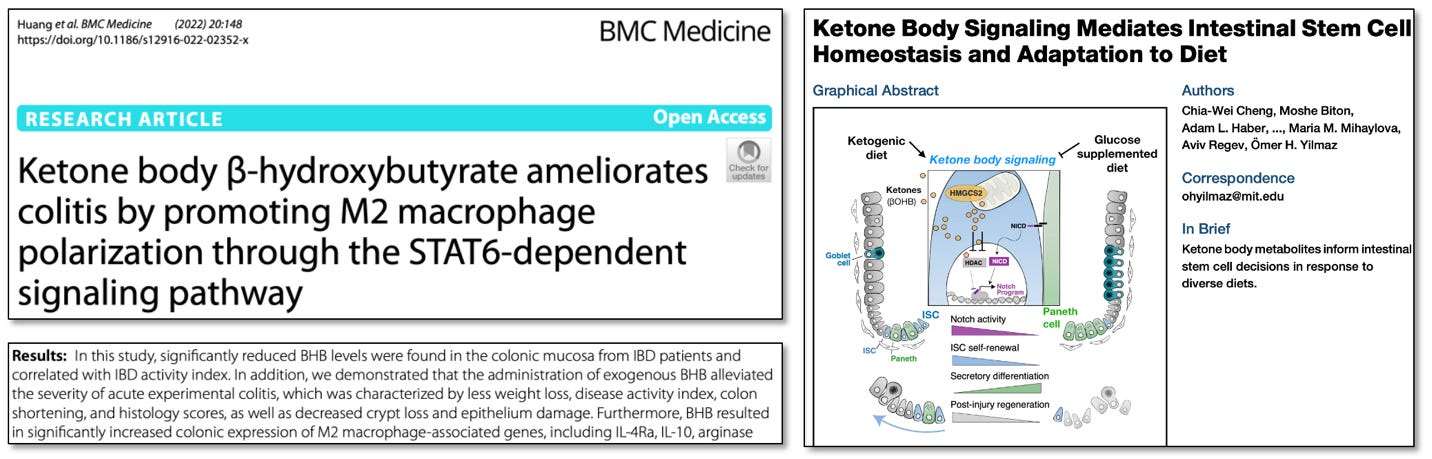
When you remove carbohydrates from your diet, your body turns fat into ketones. This is in part to fuel your brain, but it also happens in the gut. Locally, ketone levels rise, and these ketone bodies are signaling molecules.
- They reprogram immune cells to an anti-inflammatory state.
- There’s even a suggestion that they can help stem cells in the gut renew better to help heal the gut lining.
And then there’s the microbiome.
Research published in Cell Host & Microbe found that fiber-free diets effectively “starve off” certain pathological gut bacteria, in particular one called Mucispirillum.
At a high level, this makes sense. If your gut issues are caused, in part, by an imbalance of bacteria in your gut, you want to starve off the bad guys.
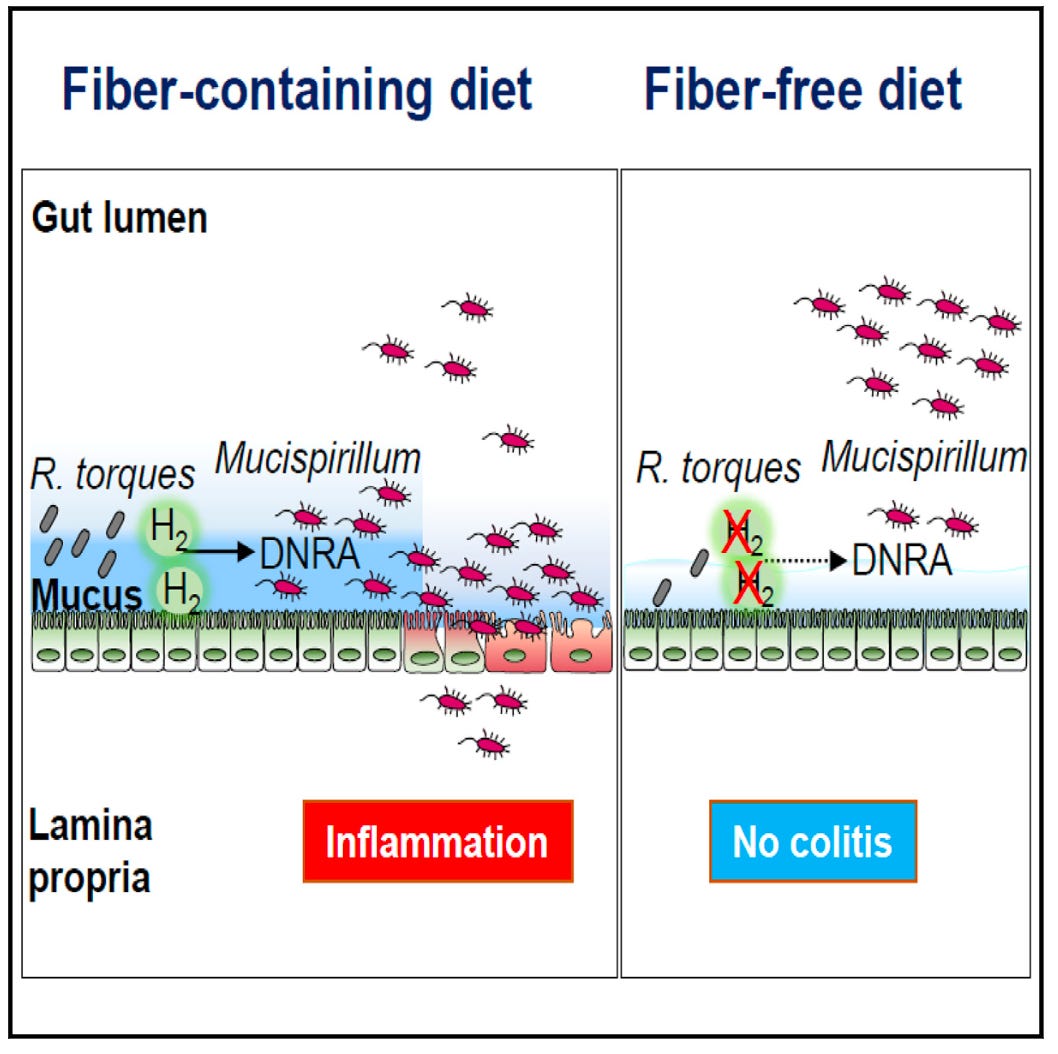
*Nuance note: Truthfully, the mechanism is a little more complicated and involves changes in the geography of this bad gut bug—what’s known as “intraluminal migration.” But for our purposes, just think about starving off the bad guys.
I’ll also emphasize that this isn’t “just” rigorous basic science published in a top journal; it’s also backed by clinical practice.
Yes, I said that.
Fiber-free diets are used in treatment-resistant cases of inflammatory bowel disease and can be highly efficacious, with reported response rates of 60 to 85%.
Now, you’ve probably never heard about this, even if you went to medical school, because it’s generally assumed that these diets are unpalatable and unsustainable—probably in part because they’re typically administered as pretty nasty shakes.
And few people have entertained the idea that you could achieve the same ends by simply having people eat meat, and only meat.
It’s health heresy… but it also works.
But is short-term symptom management sustainable?
What about microbiome diversity?
Then, beyond the gut, what about:
- Nutrient deficiencies? Calcium, omega-3s, vitamin C?
- Athletic performance?
- Other potential medical indications, including autoimmune diseases? Eating disorders?
We’ve barely begun…
In the rest of this article for StayCurious Metabolism Premium members, I’ll get into the good, the bad, the ugly, the unexpected, the counterintuitive, the paradoxes, and the practical takeaways.
Because the goal isn’t to convince you to eat carnivore.
It’s to convince you that curiosity should always outrank certainty.
And if that way of thinking resonates with you, I invite you to join a community of deep thinkers and lifelong learners who call StayCurious Metabolism “an oasis of nuance on the internet,” and one of the best investments they’ve made in their health journey.
To continue reading this article go here: https://staycuriousmetabolism.substack.com/p/i-tried-the-most-extreme-version